Urumqi was a major hub on the silk road during China's Tang's Dynasty. The city has a population of around 2.5 million and is in the Tian Shan mountains. Urumqi is quite famous for its claim that it is the most inland major city in the world, that being the farthest from any ocean. I believe it's even mentioned in the Guinness Book of World Records. There are two major ethnic groups, the traditional Han (1.5 million) and Uyghur (0.25 million). Other ethnic groups in Urumqi include Kazakhs, Kyrgyz, Mongols and Hui Muslims. We saw blue sky while we were there even though it is supposed to be one of the most polluted cities in the world. The history of the Uyghur and Han people was very interesting as we enjoyed this huge city in China.

Turpan is located about 93 miles southeast of Urumqi in a mountain basin. The heat and dryness of the summer combined with the area's ancient system of irrigation, allows the countryside around Turpan to produce great quantities of high-quality fruit. We bought bags of delicious raisins, figs, and dried apricots to eat. The sweet farmers and families were selling the fruit at small stands outside the village doors along the clay paths. It was an interesting step back into time as we visited the home of the Urgur family and watched their primitive lifestyle. The children were adorable. The mosques were simple and beautiful making it a peaceful place for this community of Muslims to worship. A stop at the Karez irrigation site revealed the ingenious irrigation system that is still working after many centuries of it's original implementation. The system taps into natural underground water sources by using a network of tunnels that channel water to the fields.
We experienced our first sleeper train as we traveled all night from Turpan to Dunhuang. The rooms were small with four little bunk beds that were dirty. I didn't sleep well at all.


Dunhuang is situated in an oasis in the Gansu-Xinjiang desert region. The city is the site of the renowned Mogao Caves, which were designated a UNESCO World Heritage Site in 1987. The Mogao Caves or the caves of the Buddahs were created between the 4th and 11th Centuries A.D. It was amazing to see the art and realize that it had been preserved for many, many years. The first caves were dug out as places of Buddhist meditation and worship. The Mogao Caves are the best known and are one of the three famous ancient Buddhist sculptural sites of China. It was fascinating to see the huge Buddha carved from stone and the Fresco art on the ceilings of the caves which had been preserved by nature. From the outside the caves looked very similar to the Indian dwellings found at Mesa Verde. We were thrilled to see this sacred area and enjoy the beauty.
X'ian is the home of the Terracotta soldiers. The Terra-Cotta Army was discovered in 1974 by peasants digging a well. Since that time archeologists have uncovered three pits of over 7,000 soldiers, archers, and horses. The life-size pottery figures were made to guard the tomb of Qin Shi Huangdi over 2,000 years ago. I was in complete surprise at the immensity of this amazing find. This emperor must have been a very self-centered leader. I'm so glad I was able to experience the Terricotta Soldiers.
The Muslim market is in X'ian. We went from the magnificent historical site of the soldiers to madness at the vendors at the Muslim market.
The silk road tour was incredible. Our tour guide was delightful and we learned so much about the people in the North West part of China.
 |
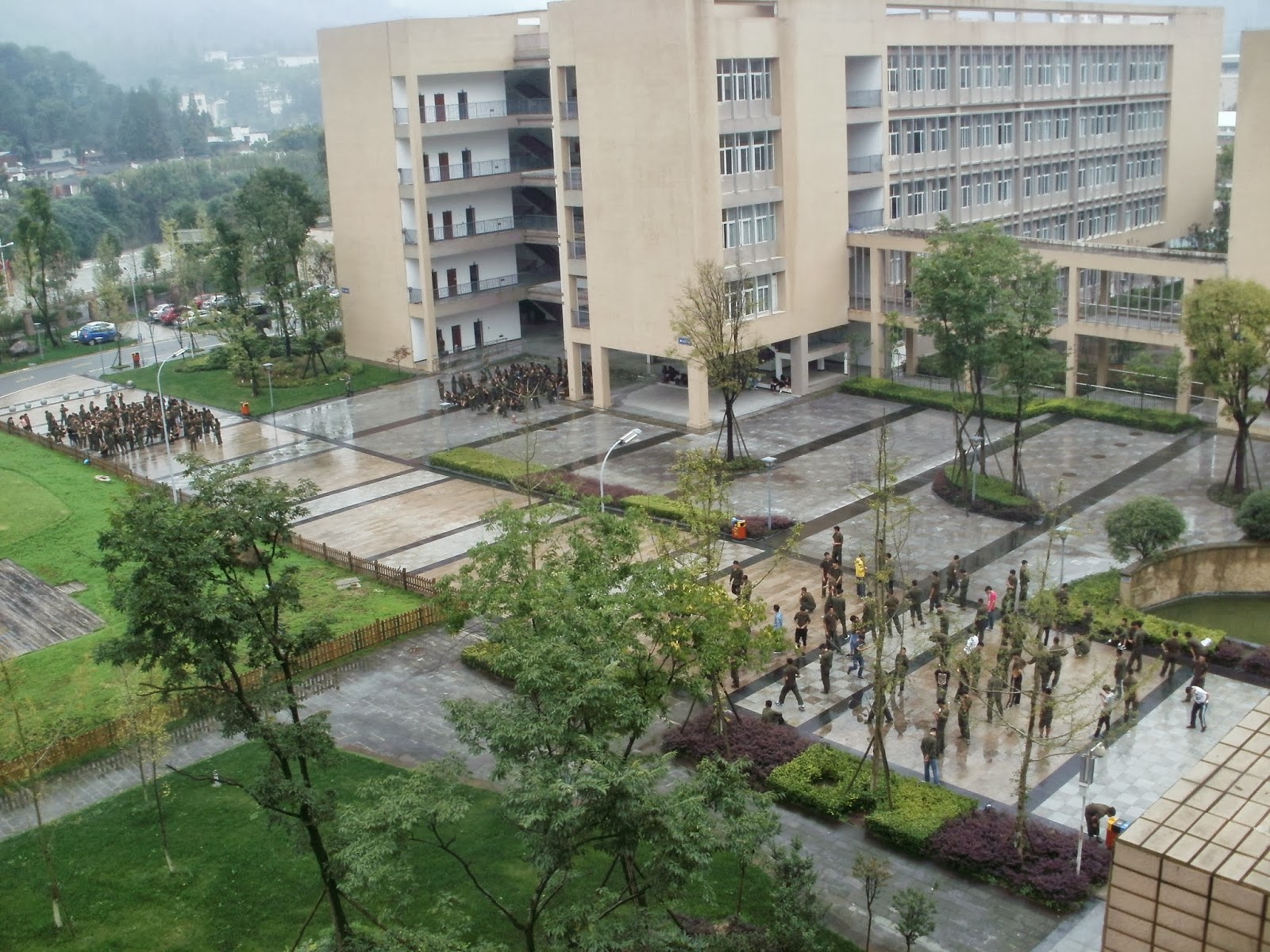
| This is the huge city the taxi driver dropped us into. |
 |
| Lots of Chinese exercise in the main square |
Some of our friends on the tour bus

Turpan is located about 93 miles southeast of Urumqi in a mountain basin. The heat and dryness of the summer combined with the area's ancient system of irrigation, allows the countryside around Turpan to produce great quantities of high-quality fruit. We bought bags of delicious raisins, figs, and dried apricots to eat. The sweet farmers and families were selling the fruit at small stands outside the village doors along the clay paths. It was an interesting step back into time as we visited the home of the Urgur family and watched their primitive lifestyle. The children were adorable. The mosques were simple and beautiful making it a peaceful place for this community of Muslims to worship. A stop at the Karez irrigation site revealed the ingenious irrigation system that is still working after many centuries of it's original implementation. The system taps into natural underground water sources by using a network of tunnels that channel water to the fields.
 |
| The outside of Tuyugou Valley Village home |
 |
| Overlooking the city |
 |
| The inside of the home. The table is used for sleeping, cooking, eating, and many other things |
 |
| A stable |
 |
| Dried fruit for sale |
 |
| The children were adorable |
 |
| Pachikli Grottos on the cliff |
 |
| Fresco's inside the cave |
 |
| This gentleman entertained us with his unique instrument |
 |
| Donkey cart ride on the way to Gaochang ancient town |
 |
| eight of us fit side by side on the cart- great fun! |
 |
| inside one of the few remaining rooms in the cave |
 |
| Gaochang ancient town |
 |
| listening to our tour guide - it was sunny - I wore sunglasses for the first time since I've been in China |
 |
| touring the underground irrigation system built many centuries ago and still working |
 |
| drying grapes |
 |
| beautiful handwork by the people |
We experienced our first sleeper train as we traveled all night from Turpan to Dunhuang. The rooms were small with four little bunk beds that were dirty. I didn't sleep well at all.


Dunhuang is situated in an oasis in the Gansu-Xinjiang desert region. The city is the site of the renowned Mogao Caves, which were designated a UNESCO World Heritage Site in 1987. The Mogao Caves or the caves of the Buddahs were created between the 4th and 11th Centuries A.D. It was amazing to see the art and realize that it had been preserved for many, many years. The first caves were dug out as places of Buddhist meditation and worship. The Mogao Caves are the best known and are one of the three famous ancient Buddhist sculptural sites of China. It was fascinating to see the huge Buddha carved from stone and the Fresco art on the ceilings of the caves which had been preserved by nature. From the outside the caves looked very similar to the Indian dwellings found at Mesa Verde. We were thrilled to see this sacred area and enjoy the beauty.
 |
| Mogao Grottos listed on UNESCO World Heritage Site |
 |
| beautiful art work that was preserved for centuries inside the grottos |
 |
| The big buddah inside one of the grottos |
 |
| another grotto |
 |
| Liuyian and the Sound Sand Mountain where we took a camel ride |
 |
| waiting to hop aboard the camel |
 |
| We're headed up the Sound Sand Mountain. The views were amazing on the top. |
 |
| getting on was easier than getting off |
 |
| Our small hike to Crescent Moon Lake after the camel ride |
 |
| Sorry, I couldn't figure out how to rotate the picture. We're at the pagoda on Crescent Lake |
X'ian is the home of the Terracotta soldiers. The Terra-Cotta Army was discovered in 1974 by peasants digging a well. Since that time archeologists have uncovered three pits of over 7,000 soldiers, archers, and horses. The life-size pottery figures were made to guard the tomb of Qin Shi Huangdi over 2,000 years ago. I was in complete surprise at the immensity of this amazing find. This emperor must have been a very self-centered leader. I'm so glad I was able to experience the Terricotta Soldiers.
 |
| City of X'ian |
 |
| Performance of singing and dancing at the Tang Dynasty |
 |
| Museum of soldiers |
 |
| Tomb of Qin Shi Huang, the emperor who had all the soldiers made in 221 BC |
 |
| Many Terra-Cotta Warriors |
 |
| We had fun together |
 |
| horses |
 |
| We were among many touring that day |
 |
| Muslim Market in Xian |
The Muslim market is in X'ian. We went from the magnificent historical site of the soldiers to madness at the vendors at the Muslim market.
The silk road tour was incredible. Our tour guide was delightful and we learned so much about the people in the North West part of China.